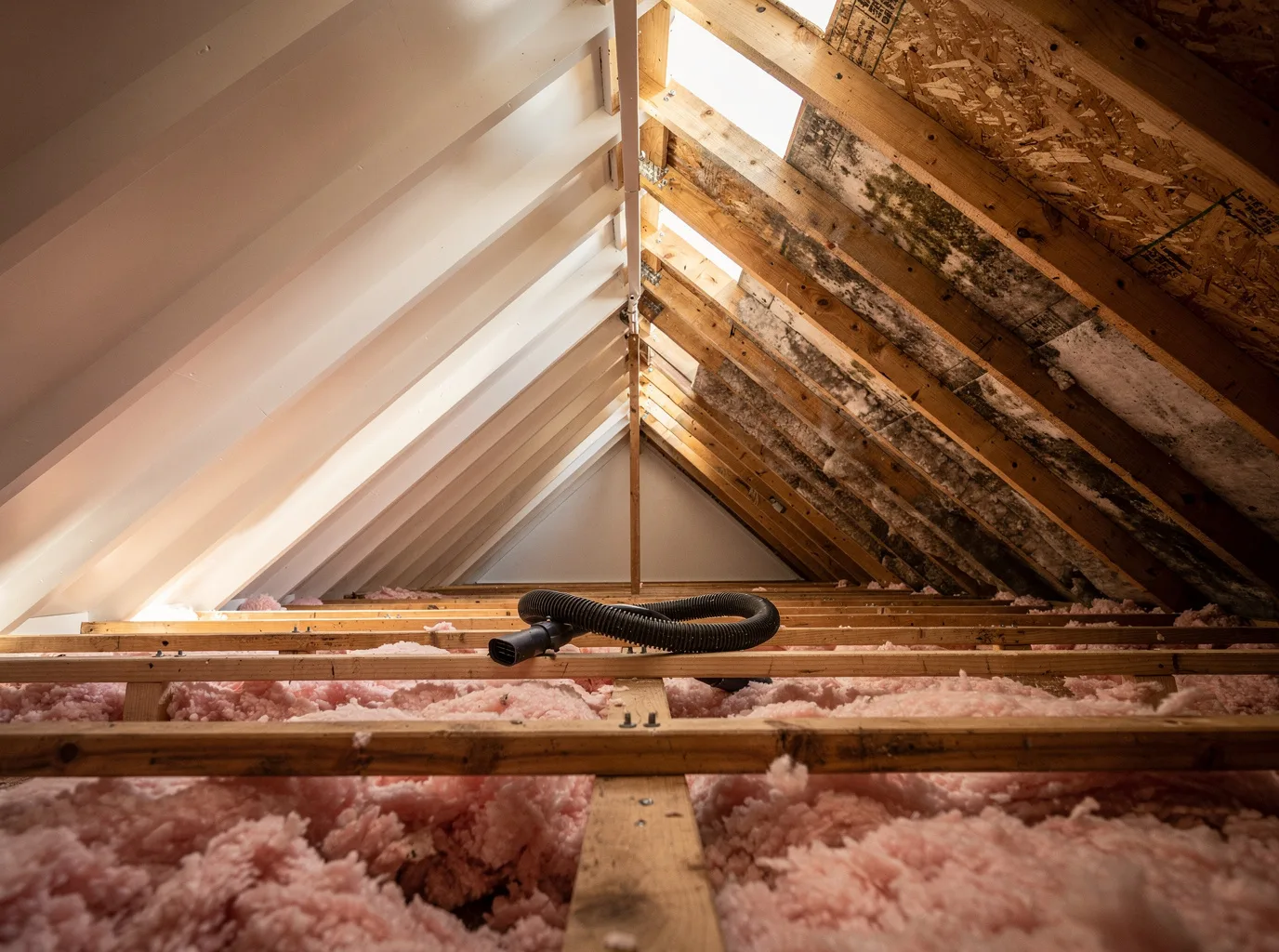
"Black mold" is what most people call any dark mold, but the one that gets the headlines is Stachybotrys chartarum, a slimy, greenish-black growth that needs material to stay wet for a long time. It shows up on drywall paper, ceiling tile and wood after a leak sits unnoticed for weeks. Black mold removal in Carlisle, IA follows the same rules as any remediation, just with less patience for shortcuts.
Not every black spot is Stachybotrys
Plenty of dark mold is something else: Cladosporium on window frames, Aspergillus niger, or plain mildew on shower grout. Color tells you very little. A lab can identify the species from a swab or tape lift if you want to know, and our page on lab mold testing covers how that works. In practice, crews treat any significant dark growth on building materials with the same care, because removal steps don't change much by species.
Why it needs careful removal
Stachybotrys is wet and sticky when active, and it dries into a powdery layer that releases spores and fragments when disturbed. Scraping it off a wall with a putty knife in an open room is the classic mistake. Crews handle it with:
- Full plastic containment with a HEPA air scrubber running negative air
- Misting before cutting so dust stays down
- Cutting out affected drywall in large sections and bagging it inside the zone
- Respirators and disposable suits for the crew
- HEPA vacuuming and damp wiping of framing before the containment comes down
Where it tends to grow
Stachybotrys needs a lot of water over time, so finding it usually means finding a long-running leak. Look behind and under kitchen sinks, at the base of walls behind washing machines, on ceiling drywall under a leaking toilet flange or shower pan, and on drywall in finished basements that took on water. If the growth is on a ceiling, see removing mold from ceilings for what's involved overhead.
Cost drivers and next steps
Cost depends on how much drywall and insulation comes out, whether framing needs sanding or blasting, how hard the area is to reach, and how many days the air equipment runs. The leak that caused it has to be repaired before rebuild, or the new drywall will grow the same thing. Many owners book clearance testing before the walls go back up. Health questions about black mold exposure belong with your doctor, not a contractor.
Until the crew arrives, leave the area alone. Close the room off, don't run a fan at it, and resist the urge to scrub or spray. Wetting a dried patch and then wiping it can smear the growth across a wider area, and disturbing it dry puts more of it in the air.
Call (984) 230-5534 and we will connect you with a local crew that handles black mold removal in Carlisle, IA.